 EUR
EUR



10 Practical Tips to Help Your Child Start Riding Confidently
Bottom line: The fastest way for a child to learn to ride is with the right fit, a safe environment and consistent short practice. Children who learn balance first typically progress to confident riding more quickly and with less frustration.
Parents often ask how to help their child start riding. Some children take to it immediately, while others need time and encouragement. With the right setup, most children progress naturally through walking, gliding and eventually riding independently.
For a full overview of bike types, sizing and progression, see our Balance Bike Guide for Parents. You can also compare options in our best balance bikes for toddlers and young kids or check sizing in our balance bike age guide.
1. Choose a Safe Location
Start in an open space without traffic or obstacles. Smooth tarmac or short grass works best for building confidence and early momentum.

2. Choose the Right Bike
A lightweight, well-balanced bike is easier to control. Check tyre pressure, ensure the wheels spin freely and confirm brakes are working correctly.
If you want a bike that lasts longer, a convertible balance bike can grow with your child and support progression to pedals.
3. Make Sure the Fit Is Correct
Your child should be able to sit with both feet flat on the ground and a slight bend in the knee. The handlebars should be easy to reach without stretching.

4. Avoid Stabilisers When Progressing
If your child has learned to balance, adding stabilisers when introducing pedals can slow progress. Learning balance first leads to a smoother transition.
5. Practice Regularly
Short, frequent sessions are more effective than occasional long sessions. Consistency builds confidence quickly.
6. Use Proper Safety Gear
A well-fitted helmet is recommended. Closed-toe shoes and comfortable clothing help children stay focused on riding.

7. Find a Gentle Slope
A slight downhill helps children experience gliding naturally. Ensure there is a clear, safe run-out area.

Top Tip: Confidence Comes from Control
Encourage your child to slow down and stop smoothly. Learning braking early builds confidence and independence.
8. Teach Brake Control Gradually
Start with gentle braking and progress to using both brakes evenly as confidence improves.
9. Be Patient
Children learn at different speeds. If progress slows, take a break and return later.
10. Lead by Example
Children learn by watching. Riding together encourages confidence and makes cycling part of everyday life.
Learning Progression at a Glance
| Stage | What the Child Does | Key Skill Developed |
|---|---|---|
| Walking | Moves bike while seated | Basic control |
| Striding | Pushes with longer steps | Coordination |
| Gliding | Feet lifted briefly | Balance |
| Pedalling | Adds pedals | Full riding ability |
Supporting Long-Term Progress
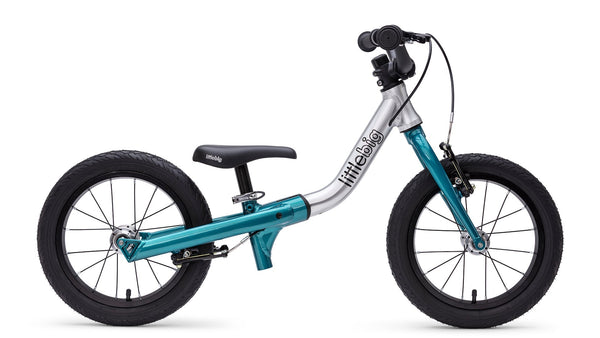
If you want one bike to support each stage, the LittleBig convertible balance bike allows children to start in balance mode and later transition to pedals on the same frame.
Frequently Asked Questions
How long does it take a child to learn to ride?
Most children begin gliding within a few sessions. Full confidence can take a few days to a few weeks depending on practice and confidence.
What age should a child start riding?
Many children start from around age 2, depending on their size and coordination.
Do balance bikes really work?
Yes. They teach balance first, which is the most important skill for riding independently.
Should I use stabilisers?
In most cases, no. Stabilisers delay balance development and can make the transition harder later.