 EUR
EUR



Balance Bike vs Training Wheels: Which Is Better for Learning to Ride?
Bottom Line Up Front
Balance bikes are more effective than training wheels for learning to ride. They teach balance, steering and control from the start, which allows most children to progress faster and ride independently sooner. Training wheels delay balance development and often make the transition to riding more difficult.
This guide explains the key differences, how each approach affects learning, and which option gives your child the best start.
Our best balance bikes for toddlers and young kids page compares the main options by age and stage. The balance bike age guide explains how to choose the correct size, and our balance bike guide for parents covers features and setup.
Balance Bike vs Training Wheels: Key Differences
| Feature | Balance Bike | Training Wheels |
|---|---|---|
| Balance development | Learned from the start | Delayed until wheels are removed |
| Confidence | Builds gradually and naturally | Often drops when stabilisers are removed |
| Transition to pedals | Usually quick and smooth | Often requires relearning balance |
| Control and steering | Full control from early stage | Limited by fixed upright position |
| Learning speed | Typically faster progression | Often slower overall |
What Is a Balance Bike?

Balance Bike Basics
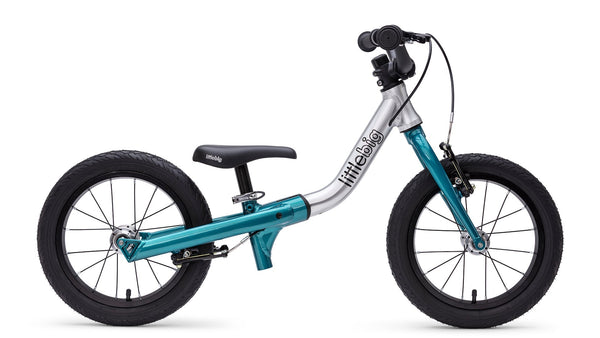
A balance bike has no pedals. The child pushes along with their feet, progressing from walking to gliding. Once they can glide confidently, they have learned to balance.
This separates balance from pedalling, allowing children to develop control, steering and braking before adding pedals.
How Training Wheels Work

Pedal Bike with Training Wheels
Training wheels support the bike and allow children to pedal without balancing. This delays the development of the most important cycling skill.
When the stabilisers are removed, the child must then learn balance while still pedalling.
Learning Progression
Balance First
Children who learn to balance first usually transition to pedalling quickly because they already feel stable and in control.
Some bikes, such as the LittleBig convertible balance bike, allow pedals to be added later on the same frame, reducing the need for a second bike.
Pedal First
Children using training wheels learn to pedal first but do not develop balance. This often slows overall progress and can reduce confidence during transition.
Cornering and Control
Balance Bike
Balance bikes allow natural leaning, which teaches proper cornering technique from the beginning.
Training Wheels
Training wheels prevent leaning and cause the bike to tip onto the outer wheel, reinforcing incorrect steering habits.
Weight and Handling
Balance Bike
Balance bikes are lighter and easier to control. This makes starting, stopping and steering more manageable for young children.
Training Wheels
Pedal bikes with training wheels are heavier and more difficult to handle, especially for beginners.
Safety and Terrain
Balance Bike
Balance bikes perform well across different surfaces. With hand brakes, children can control speed safely on slopes.
Training Wheels
Training wheels struggle on uneven ground and can cause instability on slopes or rough surfaces.
Why Balance Bikes Work Better
Balance is the foundation of cycling. Balance bikes teach this first, allowing children to focus on control before introducing pedalling.
Training wheels delay balance development, which often leads to a more difficult transition later.
Final Verdict
Balance bikes teach the correct skills in the correct order. Training wheels prioritise pedalling and delay balance.
For most children, learning balance first leads to faster progress, better control and a smoother transition to independent riding.
Frequently Asked Questions
Are balance bikes better than training wheels?
Yes. Balance bikes teach balance first, which allows children to progress more quickly and confidently.
Why do training wheels slow learning?
They prevent children from learning balance. When removed, the child must then learn balance separately.
What age should a child start a balance bike?
Most children start around age two, depending on coordination and confidence.
Do children still need stabilisers?
No. Most children who learn on a balance bike do not need stabilisers.