 EUR
EUR



Balance Bike Age Range: How to Choose the Right Bike for Your Child
Bottom Line Up Front
The right balance bike size depends on your child’s inside leg measurement, confidence and stage of development. Most children start around age two, but the best fit is determined by saddle height and control, not age alone. Choosing the correct size helps children learn balance faster and transition more easily to pedalling.
This guide explains how to choose the right balance bike based on age, size and riding stage, and what to look for as your child progresses. For advice on features, benefits and how to choose, see complete balance bike guide for parents.
Children develop at different rates, so it is important to consider coordination, strength and any additional needs alongside age and height. Some children are ready to pedal by age three or four, while others benefit from using a balance bike until six or seven.
Balance Bike Size Guide by Age
```html| Age | Typical Bike Type | What to Look For |
|---|---|---|
| 2-3 years | Balance bike | Low saddle height, lightweight frame and easy control |
| 3-4 years | Adjustable balance bike | Room to grow, brakes and a wide saddle height range |
| 4-5 years | 14 inch balance bike | Larger fit range and support for the transition to pedals |
| 5-6+ years | Convertible balance bike | Suitable for taller children, older beginners and late starters |
Best Balance Bike by Age (Quick Picks)
This overview shows what to prioritise at each stage. For detailed comparisons, see our best balance bikes for toddlers and young kids. Choosing the correct size at each stage makes learning easier and helps children progress naturally.
- Age 2–3: Choose a bike with a low minimum saddle height, lightweight frame and stable geometry to support early confidence.
- Age 3–4: Look for a wide adjustment range so the bike can grow with your child as confidence and stride length increase.
- Age 4–6: A larger balance bike or a convertible model can support the transition to pedals while maintaining a familiar fit.

When Should a Child Start Riding a Balance Bike?
Most children are physically and developmentally ready to begin riding a balance bike around age two. However, readiness depends more on confidence and coordination than a specific birthday.
Some toddlers as young as 18 months enjoy sitting on a toddler balance bike, walking alongside it and becoming familiar with steering and control.

How to Check If a Balance Bike Fits
To check whether a balance bike fits correctly, your child should be able to sit on the saddle and place both feet flat on the ground while holding the handlebars.
The handlebars should feel natural to reach, without overstretching or feeling cramped. A slight bend in the elbows with a gentle forward lean is ideal.
If you are measuring in advance, check your child’s inside leg measurement against the minimum and maximum saddle height range on the manufacturer’s sizing guide.

How Long Does It Take to Learn?
Most children begin balancing quickly once they can walk confidently and are using a lightweight bike that fits properly. Some progress faster than others, but with practice children naturally develop balance before pedalling.
Typically, children start by walking with the bike, then move on to striding and gliding with their feet lifted.
When Is a Child Ready to Pedal?
Children are usually ready to begin pedalling when they:
- Can glide confidently for 10 seconds or more.
- Can steer and control direction smoothly.
- Can use brakes effectively. See our guide to balance bikes with brakes.
- Fit their pedal bike correctly.
Read more in our guide: 6 Ways to Tell If Your Child Is Ready to Start Pedalling.
Balance Bike for a 2 Year Old
For a two year old, look for a lightweight frame, low saddle height and stable geometry. At this stage, building confidence is more important than speed.
A balance bike with a wide adjustment range can support this early stage and continue to fit as your child grows.

Balance Bike for a 3 Year Old
At three, children often gain more confidence and may require a slightly higher saddle and longer reach. Adjustable sizing becomes increasingly important at this stage.
Research, including this study on balance bikes, highlights how early balance practice supports coordination development.

Balance Bikes for Older Kids (4 to 5 Year Olds)
```htmlBalance Bikes for Older Kids (4 to 5 Year Olds)
Many balance bikes are designed primarily for toddlers and younger children. By age four or five, some children begin to outgrow smaller frames and need more saddle height, longer reach and better braking systems.
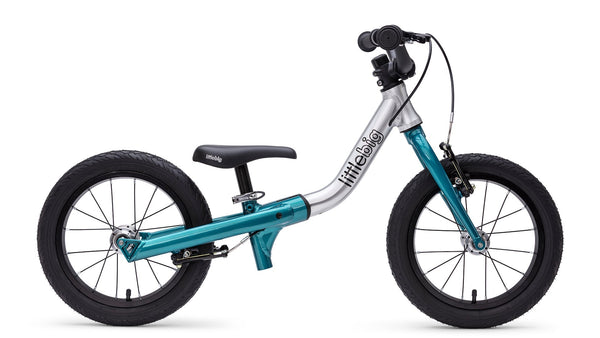
A 14 inch balance bike is often a good choice for older children because it provides a larger fit range and a more natural riding position. This can be particularly helpful for taller children, late starters or children who are still developing confidence before learning to pedal. If you're comparing different options, check out our kids bike comparison guides.
Rather than focusing solely on age, check your child's inside leg measurement against the bike's saddle height range. A properly fitted bike allows both feet to rest comfortably on the ground while providing room for growth.
Some children are ready to pedal at four, while others benefit from continuing on a balance bike until five, six or even seven years old. The goal is confidence and control, not reaching a particular milestone by a certain age.
For children who need a bike that can continue growing with them, a convertible balance bike can bridge the gap between learning to balance and learning to pedal while maintaining a familiar riding position.
```
When to Transition to a Pedal Bike
Most children learn to pedal independently between ages four and six, though readiness varies. Confidence and balance should come first.
Many families traditionally moved from a balance bike to a separate pedal bike. A convertible balance bike allows pedals to be added when your child is ready, maintaining familiarity while supporting progression.

Do Children Need Stabilisers?
Before balance bikes became common, many children used stabilisers. Today, many experts recommend learning balance first, as stabilisers can delay independent control.
Read more in our guide: Balance Bike vs Training Wheels.
Balance Bikes for Children with Additional Needs
Children with autism, dyspraxia or Down syndrome may benefit from a stable, adjustable bike that allows them to build skills gradually and confidently.
A growing frame gives children extra time to develop balance without feeling rushed or outgrowing their bike too quickly.
“My son learned to balance at 7 after struggling on other bikes. The growing frame gave him the time he needed.”
Tina, Ireland
Frequently Asked Questions
What age should a child start using a balance bike?
Most children start around age two, but readiness depends more on coordination and confidence than age alone.
How do I know if a balance bike fits?
Your child should be able to sit on the saddle with both feet flat on the ground and comfortably reach the handlebars.
What size balance bike does my child need?
The correct size is based on inside leg measurement and saddle height range. A lower starting height allows earlier use and better control.
When should a child move from a balance bike to pedals?
Children are ready to pedal when they can glide confidently, steer smoothly and control speed using brakes.
Are balance bikes better than stabilisers?
Balance bikes help children develop coordination and balance first, which usually leads to a smoother transition to independent riding.
What is the best balance bike for an older child?
Older children often benefit from a larger 14 inch balance bike with a wide saddle height range and proper brakes. The most important factor is fit rather than age, as some children continue using a balance bike successfully until age five or six before transitioning to pedals.