 EUR
EUR



Balance Bike With Brakes - Why Your Child Needs Them
A balance bike with hand brakes helps children develop safe stopping skills before they transition to pedals. While very young toddlers may stop with their feet, children aged two and above benefit from learning proper brake control early. Short-reach hand brakes improve downhill control, build confidence and prepare children for riding a pedal bike safely.
If you're researching balance bikes for your child, our Balance Bike Guide for Parents explains how balance bikes work, how to choose the right size and when children are ready to progress to pedals.

Do Balance Bikes Need Brakes?
Very young toddlers often stop a balance bike using their feet, particularly when riding on flat ground. However, as children gain confidence and begin gliding faster, hand brakes become an important skill for safe control.
A balance bike with hand brakes allows children to gradually learn proper braking technique before they transition to pedals. This makes the move to a pedal bike much easier because braking is already familiar.
Balance Bike With Brakes or No Brakes - Which Is Better?
It partly depends on your child’s age and stage of development. If your child is starting very early, around 18 months, a lightweight bike without brakes can help them focus purely on balance and steering.
At this stage, children usually stop by dragging their feet. However, as coordination improves, especially from age two onwards, brakes become increasingly beneficial.
Top Tip: Choose a Balance Bike With Proper Hand Brakes
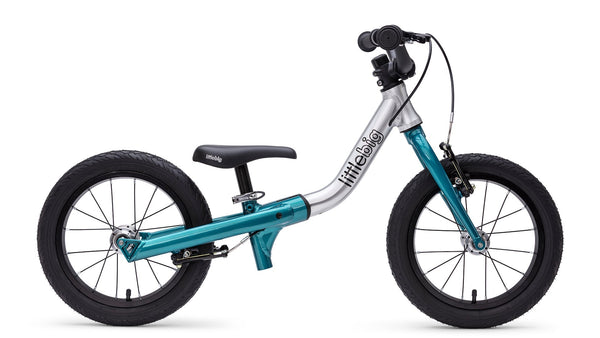
The LittleBig convertible balance bike includes front and rear hand brakes with short reach alloy levers designed specifically for small hands.

When Can Kids Start Using Brakes?
Between ages two and three, most children develop the coordination and hand strength required to operate brake levers effectively. As speed increases and riding extends to gentle slopes, relying only on feet to stop becomes less efficient.
Children often begin by slowing down with their feet and gradually incorporate the hand brakes as confidence grows.
What Should You Look For In Balance Bike Brakes?
Material
Avoid plastic brake levers and calipers. While they are light and inexpensive, they flex under pressure and reduce braking efficiency. Alloy components provide more consistent and reliable stopping power.
Lever Shape
Short reach brake levers designed for children are essential. Adult levers adjusted for reach are often still too large and uncomfortable for small hands.
Brake Type - V Brake or Sidepull?
V brakes are the most common and powerful rim brake system found on children’s bikes. They offer strong stopping performance and are easy to adjust. As with levers, alloy components are preferable to plastic alternatives.
Do Children Need Both Front And Rear Brakes?
A rear brake can slow a bike effectively, but having both front and rear brakes improves stopping power and control, particularly on hills. Balance bikes sit lower than pedal bikes, reducing the risk of going over the handlebars when braking correctly.
Learning to use both brakes on a balance bike makes the transition to a pedal bike much smoother, as all pedal bikes rely on braking for safe control.

Coaster Brakes or Hand Brakes?
Coaster brakes are common in the United States and operate by back pedalling. While simple, they are heavier and can engage unexpectedly. They are also not serviceable in the same way as hand brakes.
Hand brakes teach transferable skills that children will use on larger bikes later. Introducing them early builds confidence and coordination.
Brakes Or No Brakes - A Simple Guide
No brakes - Suitable for very young riders on flat ground who stop using their feet.
Rear brake only - Offers basic speed control on gentle slopes for developing riders.
Front and rear brakes - Provides the highest level of control and is recommended as children grow in confidence or ride on varied terrain.

Can You Add Brakes To Any Balance Bike?
If a balance bike is not designed with brake mounts and cable guides, retrofitting brakes is usually not possible. Many brakeless bikes also use wheels without proper braking surfaces.
If you anticipate your child riding on slopes or progressing quickly, choosing a model designed with brakes from the start is often the safest option.
Balance Bikes With Hand Brakes
If you are looking for a balance bike with brakes, prioritise lightweight control, short reach levers and braking systems designed specifically for children.
The LittleBig Convertible Balance Bike includes both front and rear hand brakes, helping children build braking confidence early and carry that skill forward when they transition to pedalling.